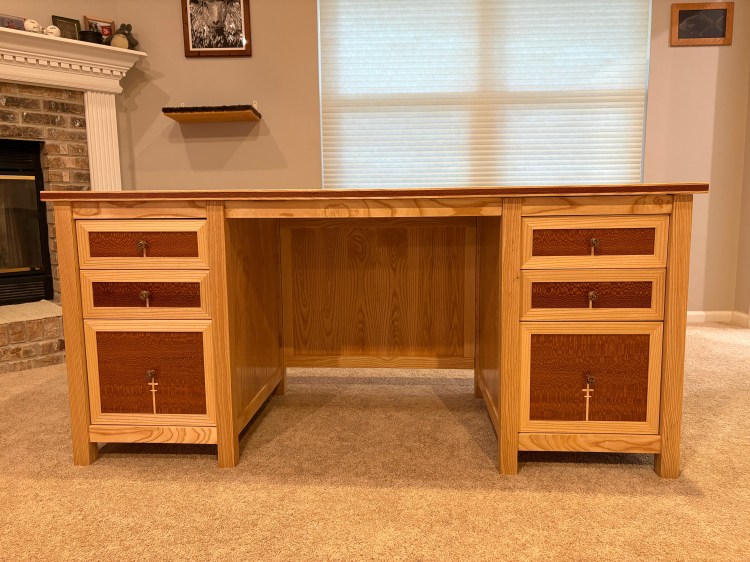
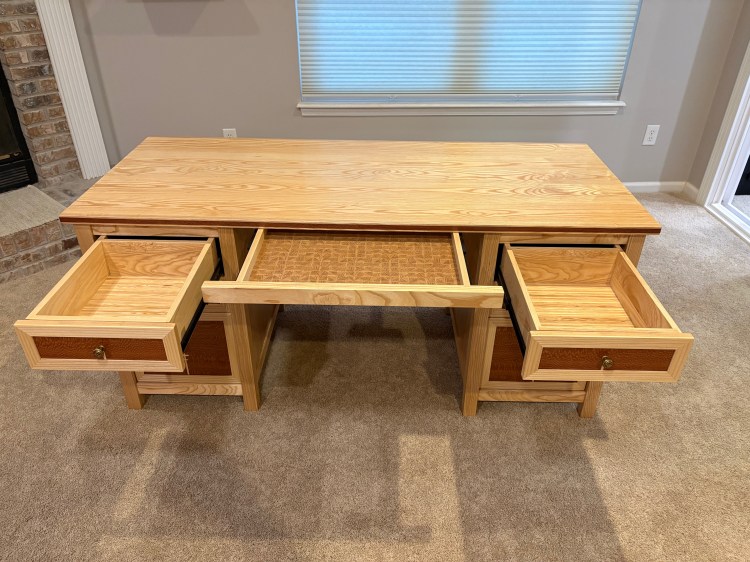
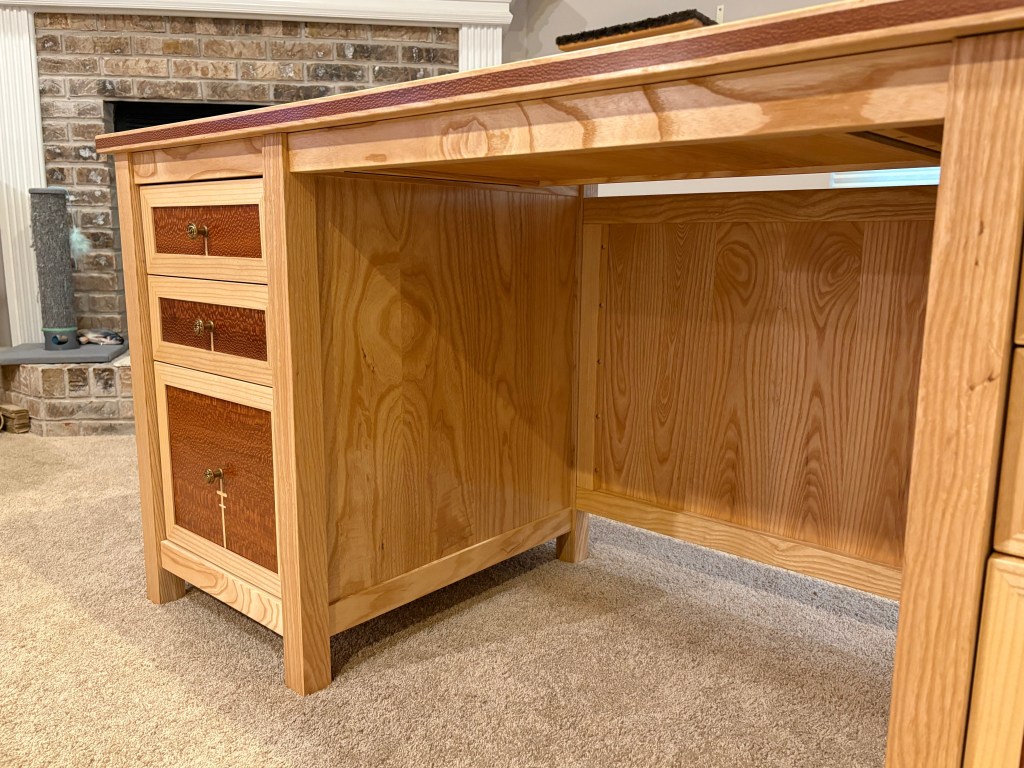
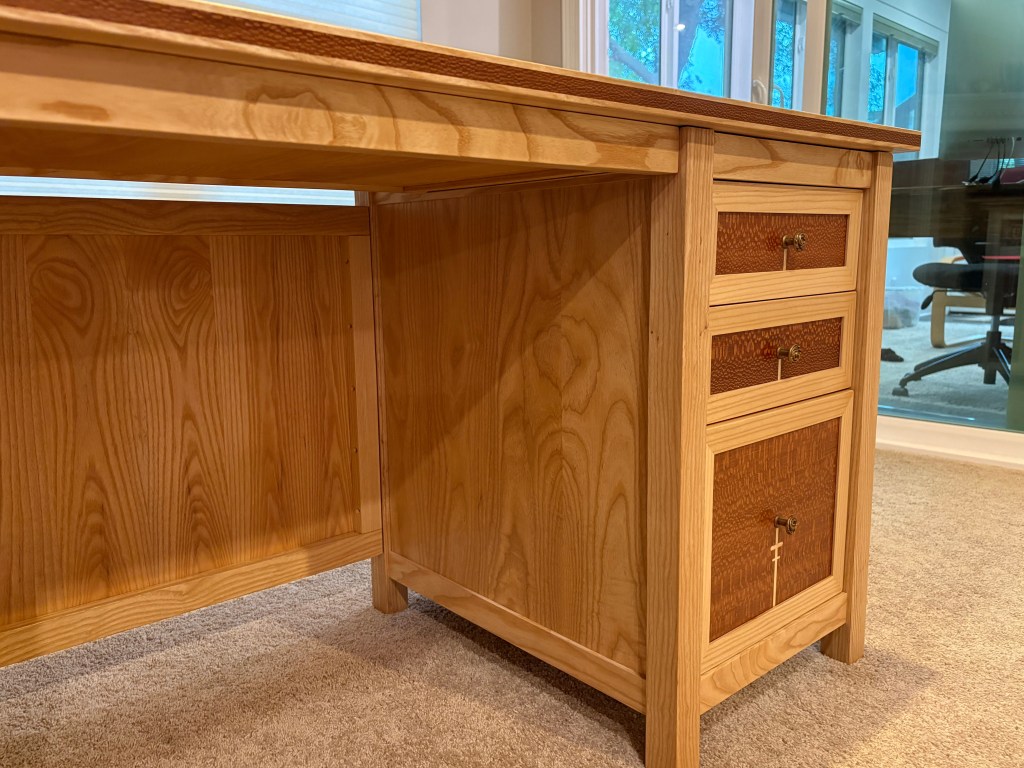
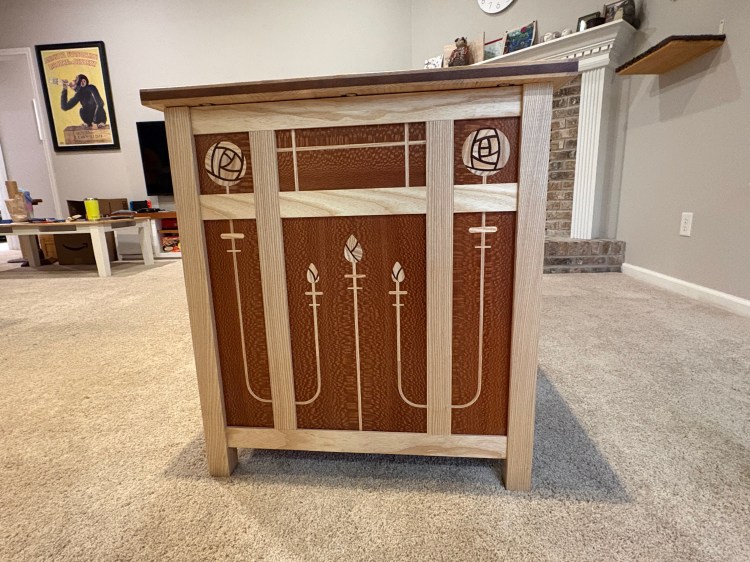
Finally done with the desk! After over one full year, any many “learnings” along the way, it is finally installed in its semi-permanent home. For those interested, details as follows: All flat panels are shop-sawn veneer over 1/4” plywood creating 3/8” final thickness. All details on the Mackintosh inspired sides were done with a router and templates. The roses were done piece by piece using a combination of a bandsaw, and sanders accommodating the convex and concave curves. The middle drawer bottom is a veneer of end grain with pieces sourced from the scraps of the 45 cutoffs from the legs. The rest of the drawer bottoms were from various assorted scraps, then veneered to plywood. For the finish – I used Arm R Seal on all large outward facing surfaces, and then on the inner surfaces Odies Oil- Dark. (Keeps the inside smelling nice vs gasoline-y.)
At the request of the customer, (Ann) the wood used was Ash and Leopard wood. To get the differences in color, I used both face grain and end grain. The finishes used were Arm
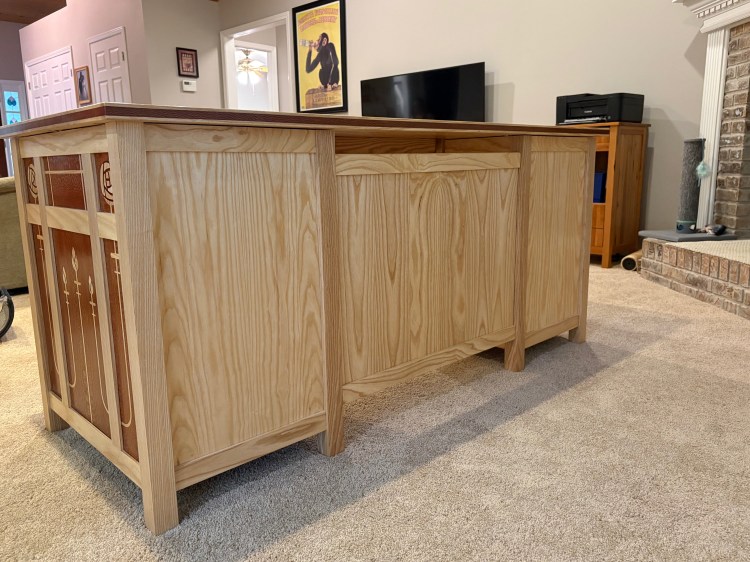
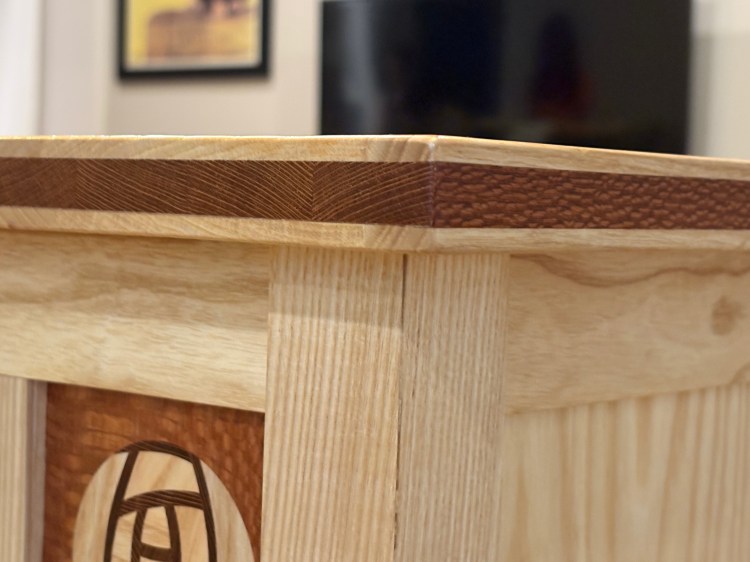
Note the continuous grain across the top, and on the bottom the two pieces there mirror each other. The back panels of the left and right drawers mirror each other to make use of some interesting grain found in the wood. The drawer bottoms make use of thin cutoffs from various stages of the project, and finally the center drawer is end grain veneered over plywood. The end grain came from the cutoffs on the leg pieces which were cut at 45degree angles to have two faces match each other. Note the mirroring of the left and right panels along with the book matching of the back panel. While not as ornate as the front, I paid significant attention to the back too, just in case this desk ever needs to sit in the center of a room vs being pushed up against a wall. Close up of the edge of the side/back of the table top. I routed out a groove for the leapordwood inserts, and on the end, I intentionally switched to end grain to mitigate wood movement issues. The roses were done piece by piece, and each combination of the Leopardwood/Ash took about fifteen to twenty minutes each. The larger panels were done with a router and templates to do the inlay. Also note the intentional switching of grain on the horizontal vs vertical pieces.
 Scraps and Cutoffs